Custom Home Bar Furniture in Sheffield: Storage, Style and Practical Details
A home bar has become much more than somewhere to keep bottles and glasses. For many homeowners, it is now a stylish feature, a practical entertaining space and a natural extension of the kitchen, dining room or living area.
For homeowners looking for home bars Sheffield, the best results often come from furniture designed around the room, the way you entertain and the details you want to keep hidden or on show. Whether you want a discreet drinks cabinet, a full fitted home bar Sheffield design, or a statement space for hosting friends and family, custom furniture gives you the freedom to make every inch work properly.
At Joseph Williams Kitchens, bespoke joinery is all about creating furniture that is personal, practical and made to suit the individual space.
Why home bars are becoming part of modern interiors
Home bars have grown in popularity because our homes are increasingly expected to do more. Kitchens are not just for cooking. Dining rooms are not just for formal meals. Living spaces often need to work for relaxing, entertaining, family life and special occasions.
Homes & Gardens notes that home bars are now “top of many homeowners’ list” because they are both sociable and practical, often working as part of a kitchen, living room or dining area: https://www.homesandgardens.com/interior-design/home-bar-ideas
That is where custom home bar furniture Sheffield can make a real difference. Rather than buying a freestanding cabinet that almost fits, a bespoke design can be made to suit an alcove, chimney breast, open-plan kitchen, dining room wall, under-stairs area or even a dedicated entertaining room.
Start with how you want to use it
Before thinking about finishes, lighting or handles, it helps to think about the role your home bar will play.
Do you want a hidden drinks station that can be closed away during the week? Do you want a sociable bar area where guests can gather? Will it be mainly for wine and glassware, or do you need space for coffee, soft drinks, cocktail equipment, beer taps or a wine fridge?
Architectural Digest highlights how modern home bars have moved into main living spaces, with drinks stations being added to kitchens, wine alcoves built into dining rooms and cocktail corners created in living rooms: https://www.architecturaldigest.com/gallery/home-bar-ideas
For Sheffield homes, this could mean a compact bar within a kitchen-diner in Totley, a dramatic fitted drinks cabinet in a period property in Nether Edge, or a modern media wall and bar combination for a family home in Dronfield or Chesterfield.
Clever storage makes the bar work
A beautiful home bar can quickly lose its impact if the practical details have not been considered. Bottles, mixers, glasses, utensils, ice buckets, chopping boards, napkins and spare drinks all need a home.
With bespoke home bars Sheffield, storage can be planned around what you actually own and use. This might include:
- Deep drawers for bottles and accessories
- Glass-fronted cabinets for display glassware
- Internal racks for wine bottles
- Pull-out trays for preparing drinks
- Closed cupboards for less attractive items
- Open shelving for decorative bottles and styling pieces
- Integrated space for a wine cooler or drinks fridge
- Hidden compartments for cocktail tools and barware
Homes & Gardens gives the example of bespoke shelving and drawers positioned at different heights so items can be stored, seen and reached easily: https://www.homesandgardens.com/interior-design/home-bar-ideas
This is one of the biggest advantages of fitted furniture. Instead of adapting your habits to suit standard units, the furniture is built around the way you live.
Hidden or on show?
One of the first style choices is whether you want the bar to be a feature all the time or a surprise behind doors.
A hidden bar can work beautifully in a multi-use room. Pocket doors, bi-fold doors or tall cabinet doors can conceal the bar when it is not in use, keeping the room calm and uncluttered. When opened, the inside can feel much more dramatic, with lighting, glass, mirrors, timber, stone-effect surfaces or metallic details creating a sense of occasion.
Homes & Gardens describes hidden home bars as a useful option for rooms with more than one function, where the bar can be concealed behind tall doors until needed: https://www.homesandgardens.com/interior-design/home-bar-ideas
An open bar, on the other hand, can become a design feature in its own right. Bottles, glassware and decorative objects can be displayed as part of the room. This works particularly well where the home bar forms part of a larger kitchen, media wall or dining room scheme.
The “bantry” idea: bar meets pantry
A useful modern concept is the “bantry”, a blend of bar and pantry. Ideal Home describes it as a combination of two desirable kitchen features: a bar and a pantry, bringing everyday storage and entertaining into one carefully planned zone: https://www.idealhome.co.uk/all-rooms/kitchen/kitchen-bantries-trend
For a bespoke kitchen or fitted furniture project, this idea can be especially practical. A tall cabinet or run of units could include space for breakfast items, coffee, glassware, spirits, mixers and serving pieces. In the morning, it works as a coffee station. In the evening, it becomes a drinks area.
For families, this can also mean including non-alcoholic options, children’s drinks, snacks, mugs and everyday tableware, so the furniture works hard beyond occasional entertaining.
Practical details to consider before installation
A successful home bar installation Sheffield project is about more than the cabinet design. The practical details need to be considered early, especially if appliances, plumbing or lighting are involved.
House & Garden recommends thinking about electrical points, a sink, refrigeration, space for ice and shelving for glasses and bottles when designing a home bar: https://www.houseandgarden.co.uk/gallery/home-bar-ideas-designs
Depending on the scale of the project, you may want to plan for:
- Power sockets for a wine fridge, coffee machine or lighting
- A small sink for rinsing glasses
- Ventilation around integrated appliances
- LED lighting inside cabinets or shelving
- Durable worktops for preparing drinks
- Easy-clean splashbacks
- Comfortable space for stools
- Safe glass storage
- Enough clearance for doors, drawers and people moving around
If you are planning a wet bar, it is important to think about plumbing access early. If plumbing is not practical, a dry bar can still be highly functional with the right work surface, storage and appliance space.
Materials set the mood
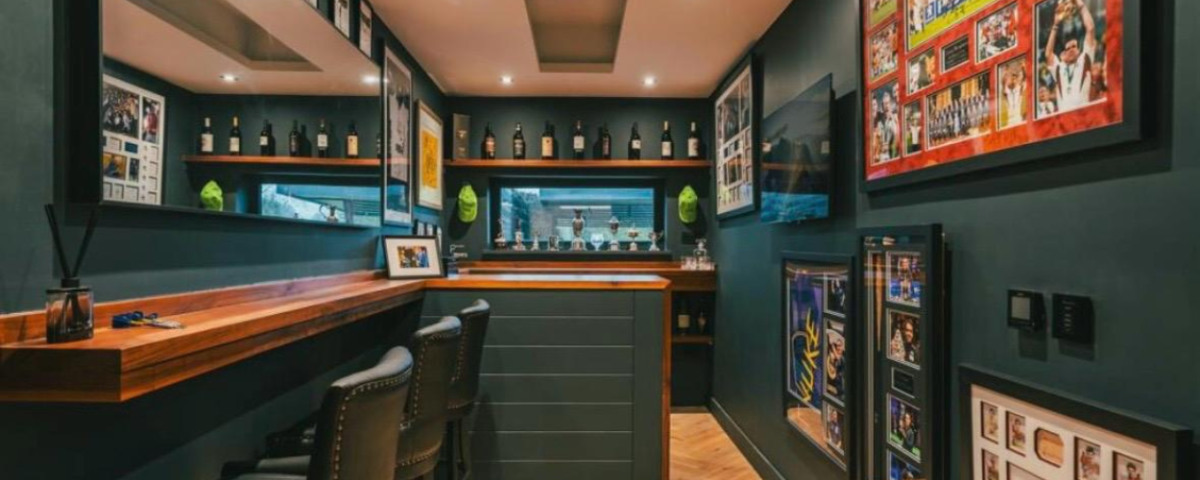
A home bar is a great place to be a little more adventurous than you might be in the rest of the room. Dark painted cabinetry, walnut tones, fluted glass, antique mirror, brass details, stone-effect worktops and feature lighting can all create atmosphere.
Architectural Digest notes that home bars can be playful and expressive, with mirrored backsplashes, brass shelving and bolder colours helping to create personality: https://www.architecturaldigest.com/story/home-bar-setup-guide
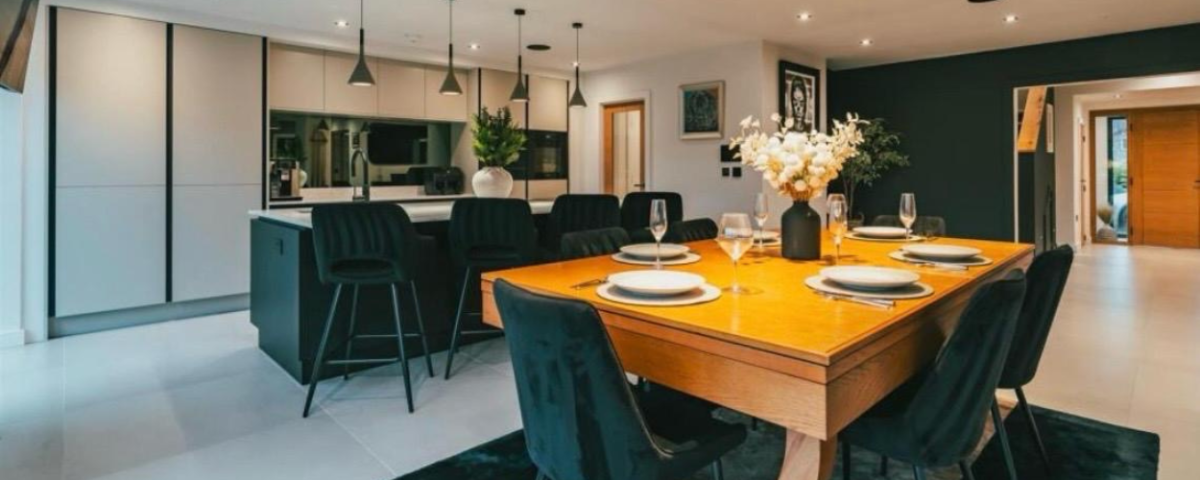
For a timeless look, timber and painted cabinetry can tie the bar into the rest of the home. For something more dramatic, contrast can work well: a dark bar within a pale kitchen, warm wood inside painted doors, or a rich interior finish hidden behind simple outer cabinetry.
The key is balance. A home bar should feel special, but it should still belong in the property.
Lighting changes everything
Lighting is one of the most important details in a fitted home bar. It can turn a simple cabinet into a feature and make the space feel welcoming in the evening.
Integrated LED strips beneath shelves, warm lighting inside glass-fronted cabinets, or soft lighting around a mirrored splashback can all add depth. Dimmable lighting is especially useful, allowing the space to feel bright and practical when making drinks, then softer and more atmospheric when entertaining.
In smaller Sheffield homes where space is limited, lighting can also help a compact bar feel more considered and luxurious rather than squeezed in.
Small spaces can still work beautifully
You do not need a large room to create a home bar. A narrow alcove, unused corner, section of dining room wall or even an under-stairs space can work well with bespoke furniture.
Livingetc points out that stylish home bar ideas do not have to be huge or unattainable; they can be created in corners, with consoles, carts or carefully styled small areas: https://www.livingetc.com/ideas/home-bar-ideas
With fitted joinery, awkward spaces can become useful. An alcove can house shelving and drawers. A kitchen corner can become a drinks station. A media wall can include a concealed bar section. Under-stairs storage can be transformed into a compact entertaining feature.
This is where bespoke design is particularly valuable, because standard furniture often wastes the very spaces that custom joinery can make practical.
Matching your home bar to the rest of the furniture
A fitted bar should not feel like an afterthought. It should connect with the rest of the home through materials, proportions and details.
If you already have a bespoke kitchen, media wall, home office or fitted furniture, your home bar can be designed to complement it. This might mean matching the door style, repeating a handle finish, using the same timber, or introducing a contrast that still feels intentional.
Joseph Williams Kitchens designs and builds bespoke kitchens, bedrooms, media walls and custom furniture for homes and commercial spaces, with each project tailored to the room and client.
This joined-up approach is particularly useful if your bar is part of an open-plan layout. The kitchen, dining area and living space can all feel connected, while the bar still has its own character.
What should you include in a custom home bar?
Every design will be different, but a well-planned fitted home bar Sheffield project might include:
- A preparation surface
- Bottle storage
- Glassware storage
- Internal drawers
- Display shelving
- Lighting
- Wine fridge or drinks fridge
- Space for a coffee machine
- A sink, where practical
- Easy-clean splashback
- Decorative backing such as mirror, timber, tile or stone effect
- Closed storage for clutter
- Open display for personality
The aim is not simply to create a nice-looking cabinet. It is to create a space that makes entertaining easier, keeps everything organised and adds something special to your home.
Designed around Sheffield homes
Homes across Sheffield, Dronfield, Chesterfield and the surrounding areas vary hugely, from Victorian terraces and stone-built cottages to modern family homes and open-plan extensions. That means a one-size-fits-all approach rarely gives the best result.
A bespoke home bar can be designed around the exact dimensions, architecture and style of your property. It can make use of period features, solve storage problems in awkward spaces, or add a contemporary focal point to a new kitchen or living area.
For anyone searching for home bars Sheffield, bespoke home bars Sheffield or home bar installation Sheffield, the most important thing is to think beyond the surface design. The best home bars combine storage, style and practical details in a way that feels effortless.
Create a home bar made for the way you entertain
A custom home bar is not just about drinks. It is about creating a space that feels welcoming, organised and personal. It can make hosting easier, add value to everyday living and bring a little theatre to your home.
Whether you want a hidden drinks cabinet, a fitted bar within your kitchen, a stylish dining room feature or a full entertaining space, Joseph Williams Kitchens can design and build bespoke home bar furniture to suit your home, your taste and your lifestyle.
To discuss custom home bar furniture in Sheffield and the surrounding areas, contact Joseph Williams Kitchens and start planning a space that is beautifully made, practical to use and designed around you.