
Fitted Home Office Sheffield: How to Create a Workspace That Looks as Good as It Works
The home office has changed considerably over the past few years. What was once a temporary desk squeezed into a spare bedroom has become an important, permanent part of many homes.
However, a successful workspace needs to do more than provide somewhere to place a laptop. It should support the way you work, keep everyday clutter under control and complement the character of the surrounding property.
A carefully planned fitted home office in Sheffield can make use of awkward corners, sloping ceilings, alcoves and entire spare rooms. Rather than adapting your working habits to suit a standard desk or freestanding cupboard, bespoke furniture allows the room to be designed around you.
Whether you work from home every day, run a business, need a quiet place to manage household paperwork or want a combined office and study area, there are numerous ways to create a practical workspace without making your home feel like a corporate building.
The home office is becoming part of the home again
For a while, home office design was heavily influenced by commercial workplaces. White desks, grey walls and black office chairs were often treated as the safest choices.
Current interior fashions are moving in a warmer and more personal direction.
Homes & Gardens’ report on the leading interior design trends of 2026 suggests that stark minimalism is giving way to rooms that feel more individual, comfortable and lived in. Rather than creating spaces that look perfect but impersonal, designers are introducing character, collected objects, pattern and natural materials. You can read the full trend report at https://www.homesandgardens.com/interior-design/interior-design-trends-2026.
This approach is particularly appropriate for home offices. You may spend several hours a day in the room, so it should feel welcoming and inspiring rather than purely functional.
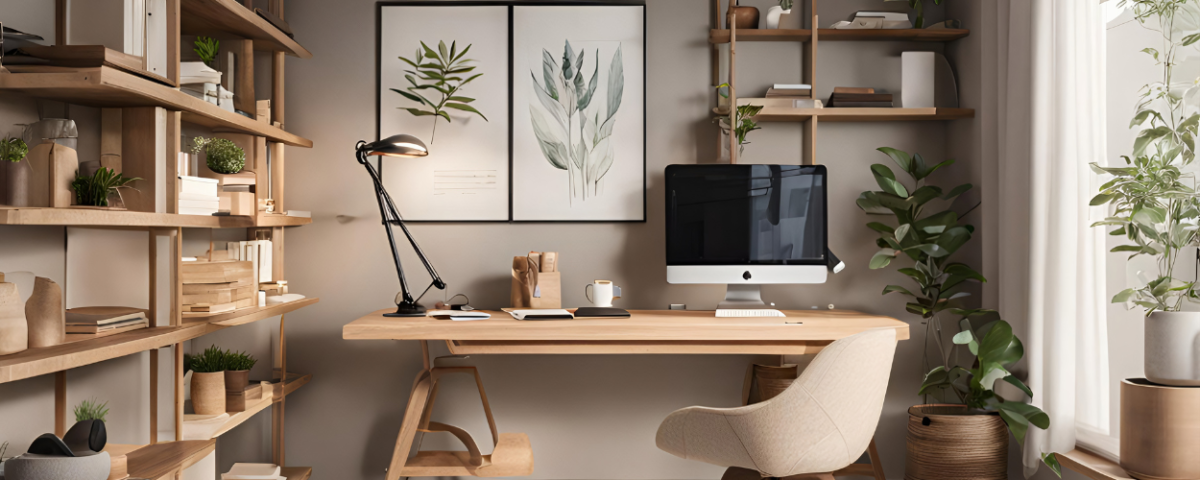
Books, artwork, framed photographs and carefully chosen display shelving can all help to make the office feel connected to the rest of the home. Bespoke cabinetry also allows practical equipment to be combined with personal possessions, rather than filling the room with anonymous office storage.
Why fitted furniture works so well in a home office
Freestanding furniture is useful when you need a quick or temporary workspace, but it rarely uses the available room as efficiently as fitted furniture.
A bespoke design can extend from wall to wall or floor to ceiling, incorporating exactly the combination of storage, display space and working surfaces you require. It can also be designed around architectural details such as chimney breasts, windows, radiators and uneven walls.
This is especially useful in period properties, loft conversions and smaller rooms where standard furniture may leave valuable gaps unused.
A fitted design might incorporate:
- A desk positioned to benefit from natural light
- Deep drawers for documents and office supplies
- Filing drawers designed around specific folder sizes
- Cupboards for printers and larger equipment
- Open shelving for books and decorative objects
- Cable access points and concealed charging areas
- Storage for stationery, packaging or business stock
- A second workstation for another family member
- Space for a comfortable reading or meeting chair
Joseph Williams Kitchens creates custom-built furniture rather than relying on standard, off-the-shelf units. This means a home office can be planned around the room, the property and the homeowner’s individual working routine.
Start with the way you actually work
Before choosing colours or door styles, think carefully about what happens during a normal working day.
Someone who primarily works from a laptop will have very different requirements from an architect using large drawings, an accountant storing confidential files or a creative professional working with samples and equipment.
Consider what needs to remain immediately accessible and what can be stored behind closed doors. Think about how many screens you use, whether you regularly join video calls and whether clients or colleagues ever visit your home.
It is also worth identifying the small irritations in your current workspace. Perhaps cables gather behind the desk, paperwork does not have a permanent home or the printer occupies most of the available surface.
These details may sound minor, but they can make the difference between an office that merely looks attractive and one that makes everyday work noticeably easier.
Combine open and closed storage
One of the most important decisions in any home office is how much storage should be visible.
Open shelving helps a room feel personal and provides easy access to books, frequently used folders and inspiring objects. However, too much open storage can quickly make the office feel busy, particularly when it is filled with cables, paperwork and mismatched supplies.
Closed cupboards and drawers create a calmer appearance by allowing practical items to disappear at the end of the working day.
A combination of the two usually provides the best result. Display shelves can be placed at eye level, while less attractive equipment is stored in cupboards below or above the main working area.
House & Garden’s collection of home office ideas highlights the usefulness of made-to-measure shelves that are designed around the height of books, magazines and box files. The same feature also notes that wall-mounted task lighting can preserve valuable desk space. The full article is available at https://www.houseandgarden.co.uk/gallery/home-office-ideas.
With bespoke furniture, shelf heights do not have to be determined by a standard system. They can be planned around the belongings you genuinely need to store.
Conceal the technology where possible
Technology is essential in most home offices, but that does not mean it needs to dominate the room.
Homes & Gardens includes exposed technology among the design choices that can make a home feel dated, reflecting a wider preference for discreetly integrated screens, cables and devices. Its article can be read at https://www.homesandgardens.com/interior-design/things-making-a-home-look-dated-in-2026.
A bespoke office can include cable channels, access holes, charging drawers and ventilation for equipment. Printers and routers can be housed inside cupboards, provided suitable airflow and access are considered during the design.
Monitors can also be positioned against a darker panel or within a fitted section of cabinetry, helping them blend more naturally into the scheme.
In a dual-purpose room, it may even be possible to hide the entire workstation behind folding, sliding or pocket-style doors. Once the working day is finished, the doors can be closed and the room can return to being a bedroom, living space or guest room.
Choose colours that help the office feel inviting
White is not the only sensible colour for a workspace. In fact, the latest interior fashions favour considerably warmer and more expressive palettes.
House & Garden’s 2026 interiors report identifies dark blues, rich browns and quieter tonal rooms as important directions. The magazine describes a move towards warmth, texture and understated colour rather than cold minimalism. You can explore the report at https://www.houseandgarden.co.uk/article/interior-design-trends-2026.
Blue cabinetry can create a smart, established appearance and works particularly well alongside oak, brass details and warm neutral walls. Deep green can make a study feel calm and traditional, while earthy browns and timber finishes bring warmth to rooms that might otherwise feel clinical.
For a lighter result, sage green, soft beige, muted pink and warm off-white can all provide a comfortable background.
Ideal Home’s guide to home office colour schemes recommends options including sage and beige, blue, earthy shades and softer pinks. It also discusses using colour to visually separate a workspace from the rest of a shared room. The guide is available at https://www.idealhome.co.uk/home-office/home-office-decor/home-office-colour-schemes.
The best choice will still depend on the room itself. A north-facing office may benefit from warmer undertones, while a bright south-facing space may comfortably accommodate deeper colours.
Consider colour drenching for a small office
Colour drenching involves carrying one colour, or closely related shades, across walls, woodwork, ceilings and sometimes fitted furniture.
Although it may sound bold, it can make a compact room feel more coherent because there are fewer strong visual breaks. The furniture becomes part of the architecture rather than appearing to project into the room.
Ideal Home includes colour drenching among its ideas for small home offices, explaining how the colour can continue across the walls, ceiling and furniture. Examples can be viewed at https://www.idealhome.co.uk/home-office/small-home-office-ideas-222302.
A muted blue, olive green or warm neutral can work particularly well. Alternatively, the fitted furniture can be painted one or two shades deeper than the surrounding walls to add definition without creating a harsh contrast.
Make the video-call background part of the design
Video meetings have introduced an entirely new consideration to home office planning: what everyone else can see behind you.
A carefully designed backdrop can look professional without feeling staged. Shelving with a restrained selection of books and objects, a piece of artwork or simple panelled cabinetry can all create visual interest.
Avoid placing the desk where a bright window will sit directly behind you, as this can affect how clearly you appear on camera. Where possible, position the desk so that daylight reaches you from the front or side.
Integrated lighting can also be useful for darker mornings and late-afternoon calls. A combination of ambient lighting and a focused task light generally creates a more comfortable result than relying on a single ceiling fitting.
Design for more than one purpose
Not every property has a spare room that can be used exclusively as an office. Fortunately, a fitted workspace can be incorporated into many other parts of the home.
An alcove beside a fireplace can become a compact workstation. An underused landing can accommodate a desk and shelving. A guest bedroom can combine wardrobes, a foldaway desk and concealed office storage.
Larger designs can provide two workstations for couples who work from home, or create separate areas for adults and children.
A bespoke office can also be designed to change with the household. Adjustable shelving, generous power access and flexible cupboard interiors make it easier to accommodate different equipment or uses in the future.
This adaptability is one of the main advantages of bespoke home offices in Sheffield. The furniture is not simply installed to fill a wall; it is designed to solve the practical demands of a particular household.
Do not forget comfort and movement
Good storage and attractive cabinetry are important, but the office must also remain comfortable throughout the day.
There should be enough room beneath the desk to change position freely, while the working surface should accommodate the necessary screens and equipment without feeling crowded.
The chair should be selected early enough for its size and movement to be considered as part of the layout. A large office chair may require considerably more clearance than a compact dining-style seat.
Frequently used cupboards and drawers should also be accessible without repeatedly moving the chair. Printer trays, waste bins and filing drawers can be positioned according to how regularly they are needed.
These practical decisions are easiest to resolve during the design stage, before the cabinetry is manufactured.
Create a workspace that belongs in your home
The best home offices do not feel like miniature corporate offices. They feel like attractive rooms that also happen to make working easier.
Materials, colours and storage should relate to the rest of the property. A traditional home may suit painted cabinetry, panelled details and warm timber, while a contemporary interior may call for cleaner lines, discreet handles and a more minimal finish.
Because the furniture is made for the room, it is possible to achieve a much more considered result than simply combining several separate pieces.
Joseph Williams Kitchens designs and builds bespoke furniture for homes in Sheffield and the surrounding areas, creating offices that balance storage, appearance and everyday practicality.
Planning a fitted home office in Sheffield?
A well-designed home office can make better use of your property, reduce everyday clutter and create a more enjoyable place to concentrate.
Whether you are transforming a spare bedroom, filling an awkward alcove or creating a complete study, fitted furniture allows every part of the design to be tailored to your space and working habits.
Speak to Joseph Williams Kitchens to discuss your ideas and arrange a free design consultation for your new bespoke home office.